Free FCSS-EFW-AD-7-6 Fortinet FCSS-EFW-AD-7-6 Practice Test Question

Loading demo links...

Showing 4–6 of 7 questions

Question 4 (Topic 1)

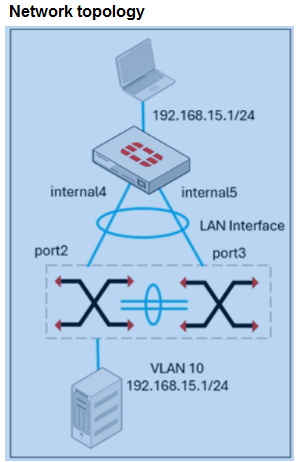
Refer to the exhibit. A LAN interface connected from FortiGate to two FortiSwitch devices is shown. Which two statements about the LAN interface connection shown in the exhibit are correct? (Choose two.)
Select an option, then click Submit answer.

  • The LAN interface must use an 802.3ad type interface.
  • You must enable Spanning Tree Protocol (STP) or Rapid STP (RSTP) on FortiGate and FortiSwitch to avoid layer 2 loopbacks.
  • The connection is using a FortiLink interface.
  • FortiGate is using an SD-WAN-type interface to connect to one FortiSwitch device with MCLAG.
Question 5 (Topic 1)

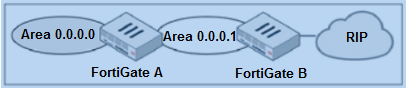
Refer to the exhibit. A partial enterprise network is shown. What must you configure so that FortiGate A and other OSPF routers in the backbone learn about prefixes generated within the RIP domain?

Select an option, then click Submit answer.

  • Configure a virtual link between FortiGate A and B.
  • Set the area 0.0.0.1 type to stub on FortiGate A and B.
  • Enable RIP redistribution on FortiGate B.
  • Configure a distribute-route-map-in on FortiGate B.
Question 6 (Topic 1)

If you configure set tcp-mss-sender and set tcp-mss-receiver in a firewall policy, how does it affect the size and handling of TCP packets in the network?

Select an option, then click Submit answer.

  • The maximum segment size permitted in the firewall policy determines whether TCP packets are allowed or denied.
  • The TCP packet modifies the packet size only if no fragmentation occurs.
  • Applying commands in a firewall policy determines the largest payload a device can handle in a single TCP segment.
  • The commands affect the payload size of the packet and the size of the IP header for handling TCP packets.